Introduction
Parenting between ages 1 and 10 is an exciting mix of milestones, mess, magic and questions. This guide offers practical, everyday ideas for fostering growth in speech, creativity, learning and emotional intelligence — with tips that work at home in Omsk (and pointers on where to find local support).
Quick principles to keep in mind
— Consistency over perfection: short daily routines help more than occasional big activities.
— Play is learning: games, songs and conversations build thinking and speech.
— Scaffold: follow your child’s lead and add small challenges.
— Emotions matter for learning: emotional safety enables curiosity.
Age-by-age highlights and activities
Age ranges are approximate — children develop at different rates.
— 1–2 years
— Focus: vocabulary boost, imitation, motor play.
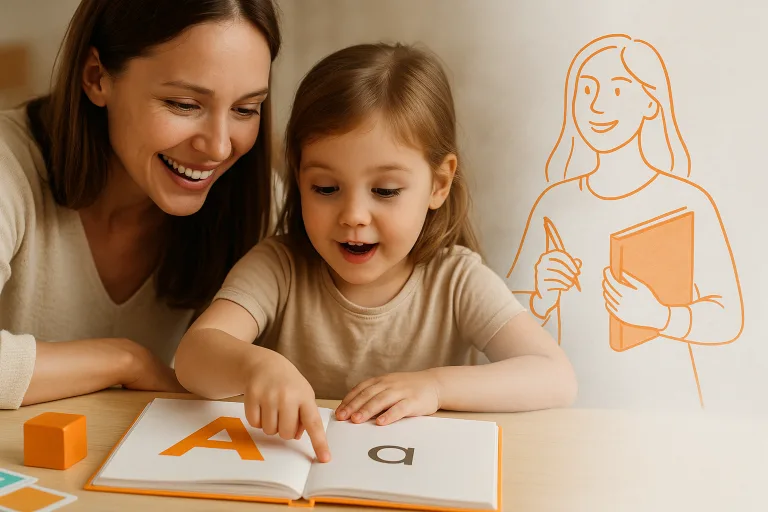
— Activities: naming routines (“Where’s your nose?”), fingerplays, ball rolling, stacking cups, simple picture-book reading every day.
— Materials: board books, soft blocks, household containers for dumping/filling.
— 3–5 years (preschool)
— Focus: sentences, pretend play, fine motor skills, early counting and letter awareness.
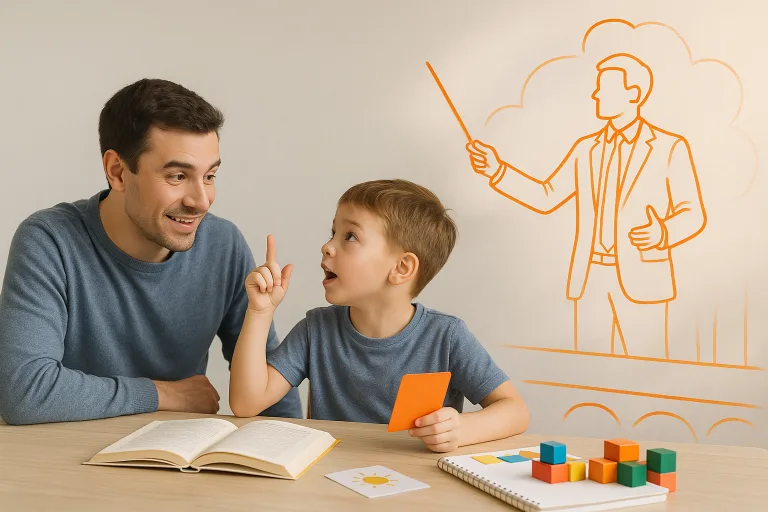
— Activities: puppet shows, role-play shops, shape sorting, painting with fingers, singing rhymes, simple treasure hunts.
— Materials: crayons, playdough, safe scissors, matching cards.
— 6–8 years (early school)
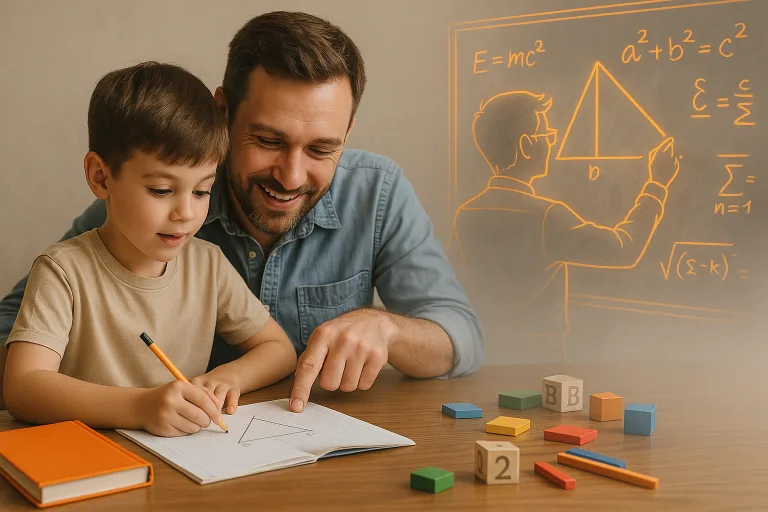
— Focus: reading fluency, basic math, logical play, teamwork.
— Activities: family storytelling, cooking together (measuring ingredients), board games (memory, simple strategy), building projects (blocks, LEGO).
— Materials: puzzles, basic measuring tools, beginner board games.
— 9–10 years
— Focus: complex language, abstract thinking, self-regulation, social problem solving.
— Activities: collaborative projects (garden, model building), creative writing, science experiments, club activities (sports, theater, coding).
— Materials: craft kits, beginner electronics sets, books by interest.
Speech and language development — everyday strategies
— Read aloud daily: point to pictures, ask simple questions, pause to let your child fill words.
— Expand and model: if a child says “dog”, respond “Yes — the big brown dog is running!” (adds grammar and vocabulary).
— Use routines as language moments: narrate dressing, bathing, cooking.
— Play language games: “I spy”, rhymes, segmentation (“How many sounds in cat?” for older kids).
— Encourage storytelling: ask “What happened first?” to build sequencing.
— Reduce screen talk: prioritize face-to-face interactions for language growth.
When to seek help: if by 2 years a child has fewer than ~50 words or difficulty combining words; by 3–4 years speech is hard to understand for unfamiliar adults; or if you have ongoing concerns — consult your pediatrician or a логопед (speech therapist).
Creative activities that use everyday items
— Sensory bins: rice, pasta, or water + spoons and containers.
— Recycled-arts: toilet rolls, cartons, buttons, glue for collage and sculptures.
— Story stones: paint/mark small stones with characters and settings for improvised tales.
— Puppet theatre: socks + glued-on eyes; perform family scenes.
— Mini science: mixing baking soda and vinegar in a safe tray; plant seeds in cups and chart growth.
Emotional intelligence — simple practices
— Name feelings: “You look sad/angry/excited” to build emotional vocabulary.
— Validate then guide: “I see you’re upset. It’s OK. Let’s take three deep breaths.”
— Calming corner: a small space with a soft toy, sensory bottle, and breathing instructions.
— Role-play conflicts: practice phrases like “I feel… when… Could you…?” to teach assertive communication.
— Problem-solving together: encourage brainstorming solutions after emotions cool.
Educational games and learning ideas
— Counting games: set the table by counting plates; count footsteps.
— Phonics: sound games — match beginning sounds to pictures.
— Memory games: homemade card pairs using family photos or drawings.
— Nature treasure hunts in Omsk parks: lists of leaves, colors, textures — combine science and movement.
— Early coding: logic puzzles, sequence cards, age-appropriate apps for older kids.
Sample weekly micro-plan (flexible)
— Daily: 15–20 min reading; 5–10 min language game; family meal chat.
— Mon: creative craft (30–45 min)
— Tue: outdoor play / park exploration
— Wed: sensory activity + math game
— Thu: music and rhymes
— Fri: role-play / puppet stories
— Sat: family project (cooking, planting)
— Sun: visit a library/m