Introduction
Parenting in Omsk brings its own rhythms — long winters, lively summers by the Irtysh, and a warm community of families. This guide offers age-focused activities, speech-development exercises, creative projects, emotional-intelligence tips, and practical resources you can use right away to support children aged 1–10.
Quick local note
— Use heated indoor spaces (libraries, family centers, playrooms) during cold months; take advantage of parks and riverwalks in milder weather.
— Look for local parent groups on social platforms (VKontakte, local forums) and ask pediatricians (врач педиатр) for recommendations for детский логопед (speech therapist) or early-development centers.
Age-by-age activities and learning goals
Ages 1–3 (toddlers)
Focus: language building, gross/fine motor skills, exploration.
— Play ideas:
— *Name-and-point*: name objects during daily routines (“Это мяч”, “Вот ручка”).
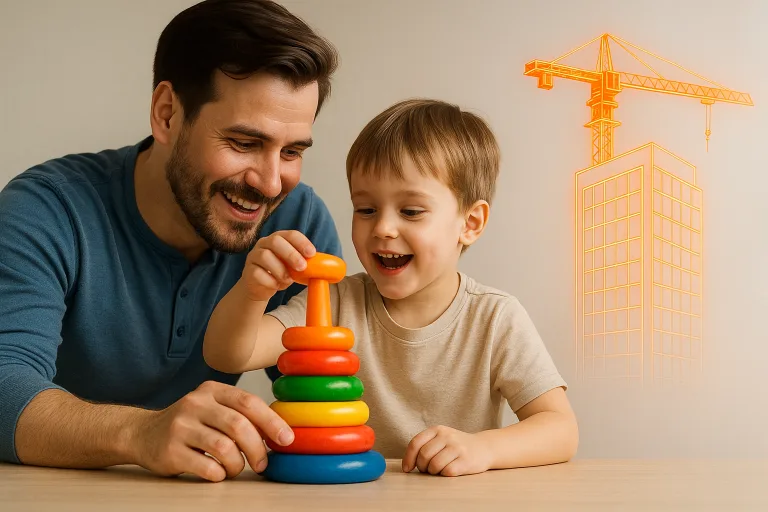
— Stack-and-knock games with cups or soft blocks.
— Sensory bins: rice, dry pasta, water (supervised).
— Simple songs with gestures (nursery rhymes, fingerplays).
— Speech tips:
— Repeat and expand: child says “мама” → parent responds “Да, мама пришла” (model longer sentences).
— Give choices: “Хочешь яблоко или банан?” — encourages words.
— Emotional supports:
— Label emotions: “Ты улыбаешься — ты рад!”.
— Create a predictable routine to reduce anxiety.
Ages 3–6 (preschool)
Focus: vocabulary growth, pretend play, early literacy and self-regulation.
— Play ideas:
— Role play (store, kitchen, doctor) with props — builds language and social skills.
— Scavenger hunts using picture clues.
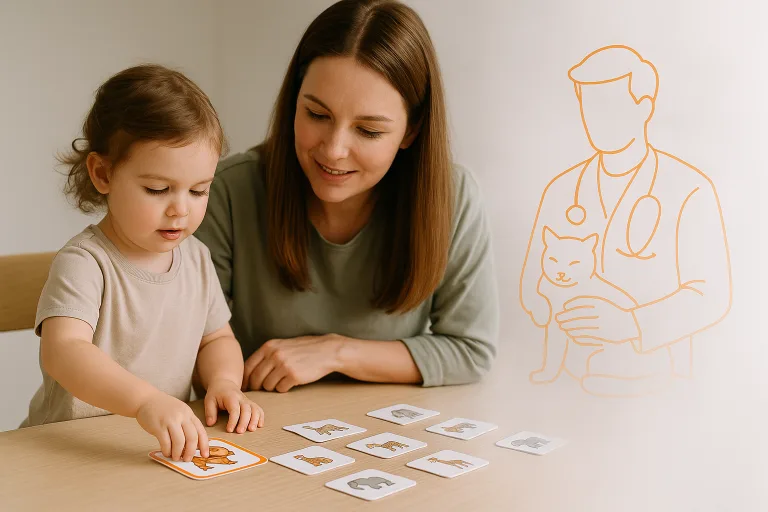
— Puzzles and simple board games for turn-taking.
— Speech and literacy:
— Read daily (5–20 minutes) together; ask predictive questions: “Что будет дальше?”.
— Sound games: find objects that start with the same sound.
— Creativity:
— Open-ended art: large paper, tempera, collage materials.
— Music and movement: dance with scarves, rhythm games.
— Emotional skills:
— *Feelings corner*: a small basket with emotion cards and a soft toy for calming.
— Teach breathing: “Дыши как зайчик” — short inhale, long exhale.
Ages 6–10 (early school age)
Focus: complex language, problem-solving, independence, empathy.
— Learning-through-play:
— STEM challenges: build a bridge from newspapers, simple mechanics with toys.
— Story-making games: one child starts a story, each adds a sentence.
— Strategy board games to practice planning and patience.
— Speech and communication:
— Encourage storytelling and retelling events — ask for details and feelings.
— Practice explanations: ask the child to teach you a task (reinforces vocabulary and sequencing).
— Creativity and projects:
— Longer-term crafts: model-building, sewing simple things, journals.
— Group projects with peers when possible — fosters cooperation.
— Emotional intelligence:
— Problem-solving script: “Я чувствую…, потому что… Мне нужно…” to teach assertiveness.
— Role-play conflicts and alternative responses.
Practical speech-development exercises (easy to use daily)
— Parallel talk: Describe what the child is doing (“Ты строишь башню из кубиков”).
— Expansion: Repeat the child’s short phrase and add one word.
— Choice-limited questions: “Хотите молоко или воду?” instead of open “Что хочешь?”.
— Labeling and describing pictures during reading.
— Rhymes and syllable clapping: break words into beats to enhance phonological awareness.
Creative activities that require little money
— Nature collage: leaves, seeds, feathers collected on a walk.
— Shadow puppets with a lamp and paper cutouts.
— Recycled-material sculptures (toilet-roll animals, carton cars).
— DIY instruments: rice in sealed containers for shakers.
— Mini-theatre: put on short plays with socks as puppets.
Emotional intelligence & positive parenting strategies
— Validate feelings first: “Понимаю, ты расстроен” before correcting behavior.
— Set clear, simple rules and consequences; be consistent.
— Use natural consequences where safe (if a child refuses a coat — they may be cold and learn).
— Teach repair: after a conflict, guide the child to apologize or fix the problem.
— Model calm: label your own emotions (“Я устал, мне нужно спокойное время”) to show self-regulation.
Seasonal ideas for Omsk families
— Winter:
— Sledding, building snow forts, snow-painting (water + food coloring in spray bottle).
— Indoor obstacle courses, sensory trays with warm rice or felt.
— Spring–Summer:
— Nature walks along the river; leaf and bug hunts.
— Outdoor art (chalk murals), water play in shallow tubs.
— Year-round:
— Visit local children’s sections in libraries; many offer story hours or activities.